Is the kitchen dead?

Introduction

Ghost kitchens have been sneaking up in the market like nobody’s business in the past few years. Gigantic companies have been built around the concept that is known as‘Cloud Kitchen’. So, what exactly are they? Simply put, it is a commercial kitchen space that provides restaurant brands the facilities and resources required to sustain a delivery and take out centric service.

Its intrinsic purpose is to provide restaurant like services without the physical infrastructure, dine in spaces and take away counters and is an operational kitchen serving as a production unit for the product that is food. One could say Cloud Kitchens are the Ola and Uber or the food industry, given as they own little to no tangible assets. No furniture, no waiters, no ambience expenses, no maintenance costs are perks they enjoy. Customers can place orders through online delivery aggregators or the specific restaurant’s app and their food will be prepared in a shared kitchen space.

Cloud Kitchens also do away with the infamous failure rates of the restaurant industries. While many factors contribute to the foundering of restaurants, the most common one is that of the location. And since cloud kitchens are not bothered about the location, that is one less factor contributing to possible failure. Their operating model is somewhat like this: The brand operating in the cloud kitchen receives an order, usually through an online delivery aggregator such as Zomato or Swiggy, the food is prepared and thus dispatched for delivery.

All a standard process of the food delivery system. But the difference here is that there is no “restaurant” space. All the food being prepared by a particular restaurant or more aptly, the concerned brand, is being prepared along side the food from different brands. Cloud Kitchens are thus just a communal, joint food preparation space in the restaurant industry.

The rudimentary concept of Cloud Kitchens however, has been around for quite a few decades now. Pizza delivery restaurants in the 1950s would prepare fresh pizzas ready for takeout without creating a physical space for dining. The modern concept of Cloud Kitchens however emerged in India in 2003 when Rebel Foods started its first business with ‘Faasos’. Since then, they have not looked back. Cloud Kitchens started popping up in India and then in the entire world as restaurants adapted to what can be called a breakthrough in the industry. 

Rebel Foods

Launched in 2004, Rebel Foods has been the pioneer of the cloud trend and it started with its founder’s dream to sell the previously unknown Calcutta Rolls, a popular street food that originated in Kolkata, India. Today, in 2021, Rebel Foods has transformed itself into the world’s largest Internet restaurant platform with 4,000 virtual restaurants and 350+ cloud kitchens in 40 cities in India and across countries like The United States of America the United Kingdom, Indonesia, Singapore, UAE, Malaysia, Bangladesh and many more. In fact, it is one of the handful companies working on all three levels of the present model of the F&B business sector of India i.e. ordering, logistics, and order fulfilment.

The brand has become India’s newest unicorn on 7 October 2021 by raising $175 million in a Series F round led by sovereign fund Qatar Investment Authority, with participation from existing investors Coatue and Evolvence. The company has also set its eyes on an IPO in the next 18-24 months

The story of such big numbers goes back to January 2011, when Jaydeep Barman and his partner Kallol Banerjee quit their jobs and started working extremely hard towards an idea, a project,which would realise their love of Indian Food and bring a systemised fast-food option, catered to the Indian taste, in a competitive environment of burgers and pizza’s. Their solution to it was a simple Calcutta Roll store chain in Pune named ‘Faasos’. The first big break just hit by October 2011, when this nascentchain raised $5 million from the American Venture Capital firm,‘Sequoia Capital’.

While their business was booming in its initial years, it faced a challenge that majority of restaurants go through, the problem of location. Their operating structure added to the problem, as a typical Faasos joint just had a small standing area with a table or two, and a basic kitchen area. If a good location failed, the high rent to be paid to acquire it made the situation even worse. And if it was successful, balancing the dining-in and delivery consumers from a joint tangled with time. A turning point came with a new infrastructure system, when online food ordering was introduced, and the persevering entrepreneurs immersed their business into it. But the rapid growth of this model led to a discovery, that 70% of its customers had never set foot in a Faasos store. As Barman and Kaloll’s internet and phone delivery business was growing independent of the stores, this discovery led to the genesis of Rebel Foods. The quick service outlets were shut down, low-rent kitchen spaces were leased and India’s and quite frankly, the world’s first ever cloud kitchen was born, a kitchen with only online delivery. As they had solved the problem of location and rent, the rent to sales ratio dropped from 15% to 4% and Faasos grew exponentially in the ensuing years. And thus, Rebel Foods became a unicorn and a revolutionary in the kitchen industry. 

Rebel Launcher

Just like Pizza Hut or KFC have their niche, Faasos was built around a niche of Calcutta Rolls. Food fatigue however is an imminent hurdle to a consumers psychology and preferences when they consume the same fare week in and week out. Faasoshowever, had already overcome this block. If it had been anoffline restaurant chain, the cost of setting up new outlets would have been higher than that of cloud kitchens, as the latter can provide the brand multiple outlets, even in a city. With set up costs minimised, fear of failure mitigated and physical constraints removed, Rebel Foods’ very own start up incubator, Rebel Launcher, has launched eleven independent brands, each with their own niche and speciality. 

Launched in 2018, the Rebel Launcher Program offers a complete operating system, with kitchens, technology, distribution channels and a supply chain and is now being used to scale up partnerships with established brands, who are working towards building a Cloud-Kitchen network to increase their market share and consumer base. Currently working with 15 restaurant chains such as Mad Over Donuts and Belgian Waffle and tying up with foreign brands such as Wendys has provided Rebel Launcher and in turn, Rebel Foods, an opportunity to establish over 250 cloud kitchens in India in the foreseeable future.

Cloud Kitchens as a separate industry

UBS in its report “Is the Kitchen Dead?” estimates that the online food delivery market will grow ten times in the next ten years, from its current value of $35 billion to $365 billion by 2030. They cite “In a world of increasingly time-starved and asset-light consumers, online food delivery is part of a mega-trend, combining the on-demand and sharing economies.” The Covid19 pandemic has also done Cloud Kitchens a great favour. Majority of the dine-in restaurants were shut down and physical dining took a back seat as home deliveries became a sort of necessity around the world. Sharing a kitchen space comes with its own benefits. The relative ease and low cost of setting up a cloud kitchen attracted many investors and also moved many restaurants to become delivery only, seeing the enormous financial and operational benefits it offered. The concept has evolved to become very diverse and dynamic in a very short period of time. There are now various types of cloud kitchen too, such as ‘Hub & Spoke Model’, ‘Pod Kitchen’, ‘Commissary (Aggregator) Kitchen’ and many more, which have been developed to cater to the ever changing demand. 

With an undeniable shift in the demand patterns of consumes, hazy regulations, an evolving and healing industry and uncertainty looming in the future, cloud kitchens have gained a significant and possibly disruptive foothold in the hospitality industry. More and more restaurants are adapting to or shifting to this model of operations, given its obvious benefits in the long run, it is safe to assume that Cloud Kitchens have the potential to be the next big thing of the restaurant industry.

-Rashika Namdev, Aastha Kumar
How REIT’s are hastening the Indian obsession with Real Estate

In 2017, a report by the Reserve Bank of India stated that Indian’s invest 77% of their savings in Real Estate and only 5% of it is invested in assets like shares, bonds etc.The Indian obsession with investing in Real Estate dates back to 1995,but Real Estate Investment Trusts (REIT) are the players which have flipped the coin in recent times.

BUT WHAT ACTUALLY ARE THEY?

Think of a mutual fund,which pools money from many investors to invest in different assets for returns. Similarly, a REIT is a listed company that would pool money and invest in property for returns.Done on a large scale,where properties are leased or let out and the company earns rental income. This income is then deducted with managerial expenses and what left is the dividend you earn.

THE GROWING INDIAN OBSESSION OF REIT

Although the market of REIT’s is better globally developed, but India’s growth trajectory has been quite consequential due to investor confidence.

What is the reason of this increased confidence?

1) Let’s talk about most important factor,the return on investment. When you compare it to assets like mutual funds and fixed deposits,a REIT would give you an annual return of 7-8% which is higher when compared to it’s minimum investment amount.

2)Secondly,unlike the traditional unsecured markets,REIT’s are regulated under the norms established by SEBI,which is why these days it attracts a broader spectrum of buyers.

3)The capital appreciation on an investor’s property gives an even higher return to the initial investment. Think about big IT hubs like Mumbai and Bengaluru, the latter being the most popular real estate giant. Now the large office spaces that will be leased out here would give maximum returns because of a higher demand and a lesser supply.

4)Even the government support to these trusts is conspicuous as the minimum investment amount was decreased from 2,00,000 to 50,000 .

5)It is mandatory for the corporation to declare 90% of the income as dividends.

All these factors are attracting a broader spectrum of Indian investors into these trusts.

What does the global market look like?

In more developed countries like the United States,more than 226 REIT’s exist that trade on one of the major stock exchanges—the majority on the NYSE with about 1000+ trusts filing for tax returns. The company American Tower,NYSE listed is the largest REIT in the world having the market capitalisation of over 99.99 billion dollars.

And in countries like UK,more than 70 REIT’s exists as they’ve been around for more than 10 years.

Other than this, all the G7 countries have a good market for these investments and also countries like Saudi Arabia and UAE have few popular REIT’s like emirates listed as well.

THE BOTTOM LINE

Today,India stands with Embassy parks,Brookfield India Real Estate and Mindspace Business Parks as listed companies,the later of which was oversubscribed by 12.96 times. A recent report by the JLL explained how $36 billion worth of real estate could be listed in India.

In the past four years, a healthy demand and supply has increased investor appetite,helping it enter a new period of prolonged growth with continuous government support.

If the market remains this healthy and the growth trajectory is constant,we may even see the biggest institutional investors stepping onboard too.

THE RISE OF SENSEX – how and why?

The morning of 21st January,2021 came in as a thunderbolt as the Sensex index crossed the historic 50,000 point mark in intraday trading,an all time high on the D- street.Despite of the impaired economic slowdown, and the pandemic on one sight, it has been able to reach the high it couldn’t in the past 30 years.

WHAT LED TO THIS RALLY?

1) GROWTH DESPITE THE PANDEMIC

The Reserve bank of India‘s last financial stability report (FSR) pointed out the divorce between the stock market and the real economy,which was cushioned by three factors. A- abundant liquidity in the banking system. B- Lowering down the cost of funds. C- Regulatory forbearance in the asset classification of specified loans amid the pandemic.

2) RELIANCE’S CONTRIBUTION

Reliance is a lion share contributor to the Sensex, with a hold of about 16% of the total index in it’s hands. And as the long dispute over the Future group-Reliance was settled and given SEBI’s approval the exact same day,it was obvious for the market to go high.

3) GEOPOLITICAL SURGE

The sudden surge in the geopolitical environment,with Joe Biden swearing in as the U.S president with his promised stimulus of 1.9 trillion dollars has quite much improved the confidence in the markets as the money is definitely expected to be flowing towards Indian companies too.

4) IT AND HEALTHCARE

Over 2020, these two sectors have outperformed themselves. Till thr august of 2020,due to the pandemic and digitisation, the information technology stocks surged about 47% and the healthcare stocks surged over 57%, changing the index from time to time.

5) MINOR FACTORS

Apart from these, liquidity boost, low rate regimes and a healthy corporate earning profile by the index heavy weights kept the markets resilient throughout the years.

6) CONFIDENCE IN THE ‘21 BUDGET

Less than 10 days away,there is a huge excitement in the market due to the upcoming fiscal year budget,with the finance minister calling it a one ‘never like before’

OVER 30 YEARS- THE HISTORY

2 JANUARY,1986

Launch with the base index value of 100.

Year 1992

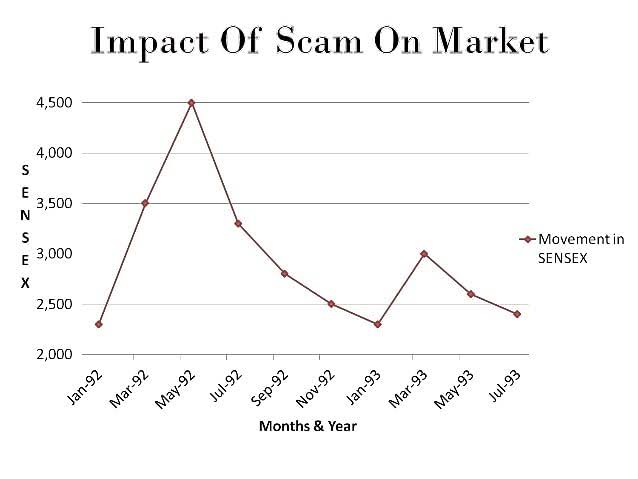
Harshad Mehta scam pushed the market down immediately while the introduction of the LPG policy surged it back up.

Year 2000

Due to the technology boom improved the market’s conditions, leading to a 5,000 point on the scale.

6 FEBRUARY 2006

Sensex crosses 10,000 mark which took the most time, about 549 sessions.

29 OCTOBER 2007

The Sensex crossed a 20,000 mark followed by a boom in 2008.

YEAR 2009

A hit due to global financial crisis.

YEAR 2015

With Narendra Modi swearing in as the prime minister and the boom afterwards,the sensex crossed a 30,000 mark which took about 1820 sessions.

23 MAY 2019

The index crossed 40,000 with just about 1042 sessions of trading.

And finally,in less than a year and just 415 sessions, it crossed the 50k mark,in midst of the pandemic. The pre- covid rise was just about 13% while the post covid rise was a whopping 24% crossing the 50,000 level. It’s journey has sure been a remarkable one.

Tesla penetrating Indian Markets- boon or bane?

Media flooded with tweets and opinions on Monday,as Minister for road transport and highways Nitin Gadkari reported that tesla is all set to enter into Indian markets in early 2021. Excluding the hype created for musk himself, would it really benefit our country?

THE NEWS

There was a prior problem when tesla aimed at introducing itself to the Indian markets in 2016,there was a 100% import duty on cars above 27 lakhs,and an additional road running tax too. But now,in 2021, the first tesla car to be introduced to India would be the tesla Model-3,likely to be priced around 55 lakh rupees.

Gadkari added that the company for now would focus on sales, and then maybe move on to assembly and manufacturing as he envisions to see India as the number one hub for automobile production in 5 years.

ARGUEMENTS IN SUPPORT

The environment factor

Earlier this year, when the NITI aayog report was released,it had the plan to electrify the whole automobile outlook in the country by 2024. India is for sure in need for pollution control, as vehicles are responsible for 66% of air pollution deaths in India. There is a need to reduce the dependency on a fossil fuel based economy. And while plans like odd and even do not work in every state, the amount of carbon dioxide generated is humongous.

Need for digitalisation

India is pushing every scheme now and then, right from startup india to digital india, to promote a technological connect of the economy.And at this point, introducing foreign companies like tesla aim at building a stronger backdrop for the same.

The brand name

Tesla has a global market share of about 18% EV’s. While the traditional manufacturers like Toyota are fighting to maintain their position in the market,Tesla, with each model keeps developing better. Tesla has maintained an 81.66% market share of the EV market in the US during the first half of 2020, often beaming on stock markets, and it stands as the most valuable Automobile company right now. It’s share price even hit a 1000$, that too in the middle of a pandemic. And the biggest contributor to it, is the CEO himself, Elon musk. So why wouldn’t a country want to invite such a technologically equipped manufacturer on its soil?

ARGUEMENTS IN OPPOSITION

Price

While all of the buzz shines as a golden opportunity,we forget the very fact that why India isn’t equipped with electric vehicles. Because of it’s price. A cost analysis done by Kearney reveals,that it would take three to five years before batteries are available at such price points in India. And if vehicle is introduced at 55lakhs, that too a Model 3, it would take years for the middle class group to get it’s hands on it.

Self sufficiency

While we chant of going vocal for local for local for petty products,and Aatmanirbharta, we do forget that as the biggest automobile company would penetrate the Indian markets, it would slowly eat up the share of the existing companies. A step that could’ve been taken here could be developing a healthy market for EV’s with Indian manufacturers like Tata,which already produces electric vehicles and then letting the foreign firms enter into it, for a healthy competition.

Increase in competition

The year 2020, without doubt, was the worst ever for the Indian automobile industry. Maruti Suzuki Q1 FY21 sales down by 82.1%

In April, there was zero automobile production in the country. Tata Motors alone posted a consolidated loss of ₹217 crore in Q2FY20, while revenues fell 9% YoY to ₹65,432 crore.

In this critical situation, when the Indian automobile manufacturers would take some years to recover, is giving a blow by introducing the biggest automobile manufacturer really helpful to the domestic market?

Think for yourself, when the outer shinier layer of Elon Musk’s company entering India fades away, would it really be beneficial for us?

HEDGE FUNDING-basics pt-1

Breaking down the term at first, the word ‘hedge’ means a way of protecting oneself against a financial loss/ adversity and the term ‘fund’ is a sum of money set aside for a particular purpose. Now putting these two terms together, a hedge fund is said to be a pool money invested in a diverse range of securities to generate returns with higher risk.

These funds use leverage, that is, in order to maximise their funds they use borrowed money which is also a reason of why they’re counted in alternative investments.

RESTRICTIONS

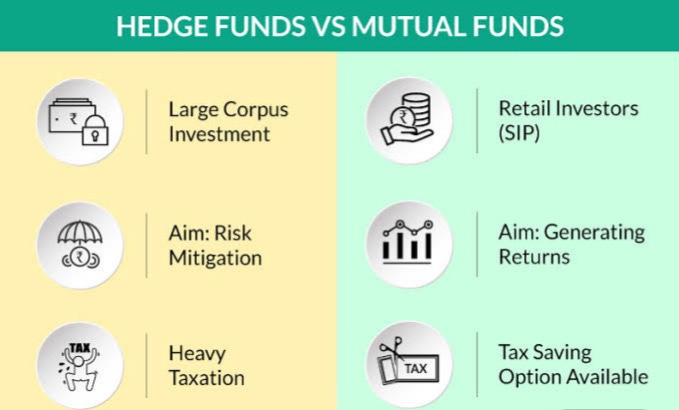
The fact that separates it from other funds is that it is usually invested by large institutional investors( usually wealthy individuals, families and banks) which is because they’re not allowed to be marketed unlike the other funds because of the high amount of risk they carry.

TWO AND TWENTY

2 and 20 is a hedge fund term which means 2% management fee and a 20% performance fee. An investment manager is given a 2% management fee and the 20% waive is given to the same manager off profits in case of exceptional performance beyond a certain limited, usually called the threshold.

The common threshold limit is 8% To some investors this two and twenty is really costly because the ROI which is consistently high in big hedge funds. In short, when a manager is given profit according to what he achieves, he works hard not only for the investors, but for himself too.

How are mutual funds different from hedge funds?

They may sound the same as mutual funds are companies which pool up money and invest the money into different securities which sounds the same as hedge funds. But, hedge funds are investments with big risks and higher rewards, limited to a number of people. Secondly, theres is a limit on the amount of capital that can be invested in mutual funds, unlike hedge funds.Moreover, in the share of profit only about 1-2% is deducted for the managerial fee in mutual funds. And while in the case of hedge funds, there’s the two and twenty phenomenon.

MOST TALKED ABOUT UPCOMING IPO’S OF 2020-21

This article will tell you about the most talked about initial public offerings to be listed on the NSE and BSE from various sectors in 2020 and 2021.

KALYAN JEWELLERS

size- 1750 crores( large cap)

One of the largest jewellery companies in India, Kalyan is a name well known. The company is set to release it’s IPO in the year 2020 after SEBI’s go ahead.

It is estimated to be around 1750 crores, out of which 750 crores would be offer for sale(OFS) by the two major investors. HIGHDELL INVESTMENTS (24% stake prior to the IPO)will let go of about 500 crores worth of shares and T.S. KALYANARAMAN(27.4% stake prior to the IPO) will let go about 250 crores worth of shares. Except this, the company is set to raise 1000 crores worth of fresh equity issue. This amount,when raised, will be used for the company’s general corporate operations and working capital requirements.

BURGER KING INDIA LTD.

size- 541.92 crores ( approximately large cap)

A famous name when it comes to fast food, burger king is set to release it’s IPO of worth 541.92 crores, pushing it to large cap since the cancellation of the previously planned 400 crore IPO. And additional (OFS) offer for sale will be released through promoters.(QSR LTD. 99.39% stake prior to IPO)The money raised through this will be used for the company’s general corporate purpose since it plans on expanding to 700 stores by the year 2026. This share sale is being managed by Kotak Mahindra Capital Company.

GLAND PHARMA LTD.

size- 1,250 crores ( large cap)

Established in 1978,Gland pharma limited is a pharmaceutical company set to release its IPO of around 1,250 crores along sith 3.4 crores of offer for sale(OFS) The company has obtained SEBI’s go ahead on october 19, with promoters Fosum Singapore and Shanghai Fosum pharma(74% stake prior to the IPO)

Kotak Mahindra Capital Company is well known for managing share sale of this company.

NATIONAL STOCK EXCHANGE (NSE)

size- 4000 crores ( large cap)

Country’s lion share exchange is set to release it’s IPO of over 4000 crores next year. It did try to release it back in 2018, but the actions came to a hault because of SEBI’s interruption. It was banned for six months in April 2019 from getting into capital markets. Through an (OFS) offer for sale, it will offload around 20-25% stake to the public.

BAJAJ ENERGY

size- 5,150 crores(large cap)

One of the interesting IPO’s set to be released, about 5,150 crores are to be raised through this IPO with an (OFS) offer for sale of around 3,000 crores offloader by bajaj power ventures. Bajaj right now owns a full 100% stake in this company and the proceeds will be utilized to purchase a huge share in 2 companies namely Lalitpur power generation company(6,99,36,900 eq. sharea) and purchasing Bajaj hindustan sugar for 4,972 crores.

LIFE INSURANCE CORPORATION(LIC)

size- not defined, but large cap.

Though it may not come this fiscal year, but LIC IPO will be one of the biggest IPO’S ever released in India since the government has asked for more than 2 advisors who have previous experiences of raising 5000+ crores in IPO’s. It plans to sell about 10% of it’s stake by listing it on NSE and BSE. Through it’s disinvestment policy, it is expected to raise around a whopping 80,000 to 1 lakh crore.

BARBEQUE NATION

size-275-350 crores(midcap)

Barbeque nation is a name almost every millennial has heard about, and it plans to go public in 2021 after the SEBI go ahead. It will raise about 275-350 crores and an (OFS) of upto 98,22,947 shares promoted by Sayaji hotels and dhamani family amongst investors.

POLICY BAZAAR

A name popularized in midst of the covid19 pandemic due to insurance, policy bazaar aims to go public in 2021 through BSE and raise about 250 million of funding through this offering .

AFTER SCAM 1992- impact on the Indian Financial Markets.

This blog will tell you about the background of the scam of1992 and explains it’s effect on the market and the government regulatory and security system.

BACKGROUND

Harshad Mehta, in 1992 drew off about 1,000 crores through loopholes in the banking system to buy stocks in the Bombay stock exchange. As he was then considered the big bull, many retail investors tried copy his portfolio and the markets, because of his pattern started achieving new heights. But this came to an end after the SBI investigation due to short fall in government securities,which revealed the fact that he almost manipulated 3,500 crores. He was jailed in 1992, and died due to a cardiac arrest in December 2001, while being in the jail.

IMPACT ON THE STOCK MARKET

The immediate effect of the news was a dip in the overall market.The index which was usually around 4500, fell down to below 2500 with a loss of crores of market capitalisation. The estimated fall was about 72% just because of the news. Since many retail investors considered him to be the big bull and copied his portfolio while the market was growing, due to emotional quotient withdrew their market money because of lack of confidence.

SEBI ACT 1992

Though first formed in 1988, after the scam the SECURITIES EXCHANGE BOARD OF INDIA ACT was established in April 1992 to look over fraudulent trade and prohibit it, and also to promote the rights of investors and players of the stock market. A new committee was formed to look over SEBI which made major changes in banking sector and simultaneously the Reserve Bank of India was given more power.

TAINTED SHARES

Tainted stock refers to stock owned or transferred by a person disqualified from serving as a plaintiff in a derivative action. All the shares held throughout this fraud became tainted i.e. they were worthless peices of paper which also led to a controversy between the investors and the government because of the confusion that which shares were tainted and which weren’t.

FORMULATION OF NATIONAL STOCK EXCHANGE

After the scam, the national stock exchange was established to bring about the transparency in the share market of India through an appropriate communication network. It ensured that anyone who had the financial requirements and was qualified enough was allowed to trade.

CII CODE

A report made by a 12 member committee headed by Rahul Bajaj was one of the major steps taken after the scam. It called for establishment of audit committees, a minimum number of board members to be non executives and urged companies to disclose more about business management and their accounting issues.

MRF- why is it the costliest stock in the Indian market?

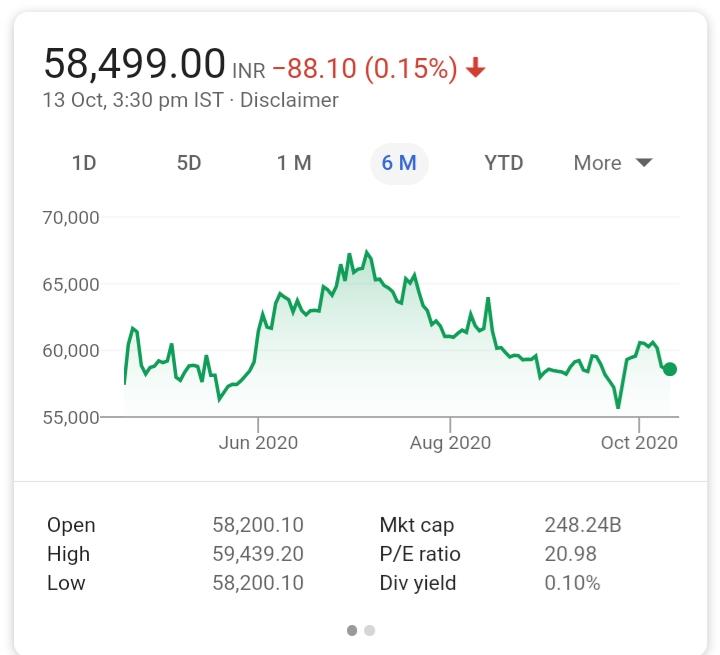
On 13th October 2020, MRF shares stand at a whopping 59,000 INR per share,no doubt in being the costliest share in India. And around April 2018, the stock hit its highest lifetime value of 81,423 and closed at around 79,000 in the bombay stock exchange.If you had bought these same shares five years ago you’d have earned around 47% returns.


WHAT IS THE REASON BEHIND THE SHARE BEING SO PRICEY?

The reason behing such a big value is the company not having it’s share split. Because as more outstanding shares increase,the lower is the price and vice versa. So an individual investor in MRF has bigger holdings though the market capitalisation is constant. Which, in turn makes the share less volatile in the market, which many retail investors can’t afford so they don’t get their hands on it. Thus, the voting rights are safe, while having the uniqueness and luxury of being India’s costliest share without any regulatory hindrances!

WHAT IS THE HISTORY AND CURRENT PROFILE OF THIS SHARE?

It was founded by K.M. Mammen Mappillai, and the share went public in April 1993 with just a facr value of 10rs per share. And within 27 years, it has given whopping returns to its patient investors, just like Warren Buffett’s Hathaway.

The current profit of this company for FY20 is rs 1395 crores, with a dividend yield of 0.159 percent per share, amounting to 94 rs for a stock price of 59,000.

Market Indices -benchmark,sectoral and market cap

In the simplest terms, a market index can be defined as indicator of the value of a basket of stocks. Now this basket, can be a broad one, like in the case of S&P 500, one of the most followed equity indices or a smaller one like nifty 50,one of the two main equity indices in India.

Investors track the value of indexes to gauge the value of different segments of the market.

TYPES OF INDEXES


1) Benchmark index: Self explanatory to their name,these are indexes which are generally used to determine the value and state of the whole market in general. These funds can basically be used to compare the returns of a mutual fund or a portfolio. And vividly, it becomes important to be able to evaluate the performance of their investments through these benchmarks.These benchmarks are created across all the asset types.
For examples,
nifty 50,and the bombay stock exchange sensex in India.
Standard and poor 500 in the United States.All of these are the barometers to the markets.

2) Sectoral indexes: these indexes contain companies that are used to determine the performance of a specific sector.They have sub sectors too, differentiating them from the rest of the securities.
For example,
NIFTY bank index, which comprises the largest Indian banking stocks,and the most liquid stocks, which largely captures the performance of equity in the banking sector.

3) Market cap based indexes: these are the indexes which select their underlying securities on the basis of their market capitalisation. They educate investors about variety of companies, both large and small. There are large, mid, and small caps.

In India,
Large caps lie over a market capitalisation of 20,000 crores
Mid caps lie above 5,000 crores and below 20,000 crores and
Small caps lie below a capitalization of 5,000 crores.

CO-WRITTEN BY VANSH SINGLA

Random Walk Hypothesis- predicting Financial Market trends

There are thousands of financial analysts working in big firms trying to outperform the stock market and it’s future with fundamental and technical skills. But the Random Walk Theory is a thinking that disregards all of the effort.

Simply put, the Random walk theory is a method used in financial markets which states that the prices of the securities follow no detectable trend i.e. are a random walk.

It states that any past trend of stock/ market cannot be used to predict it’s future. Think for yourself, did you ever think there would be a pandemic where you would see stocks of pharmaceutical companies in midst of a bull run with the big hefty nifty 50 ones, where every investor is trying to invest in it?

Well, yeah, that’s what the theory explains.

Investors who believe in this theory generally invest in the securities that define the whole market,and use the buy and hold strategy(for the long run) as markets can usually be interpreted in the short run.

One more theory, which is the Efficient Market Hypothesis is often confused with this one. While the former suggests that all the relevant information is used to estimate the price of a security, the latter argues that it is just a random walk.

Drawbacks related to this theory

As one would argue, how do these same money managers end up making millions and billions based on their actuarial skills if this theory exists?

Yes, the theory has its fare share of criticism.

The simple argument that can be put up against it is that price of a security has various factors affecting it,most of which can be looked upon. ( demand, parent company,etc.)

Secondly,stock prices do follow certain trends, just because the future can’t be known, doesn’t mean the past trends of the security wont be affecting it.

All in all, it sums up to be just a theory, and not a proven method. It is based on the preferences of each investor,whether she/ he thinks that stock market is somewhat predictable or not.

Design a site like this with WordPress.com
Get started